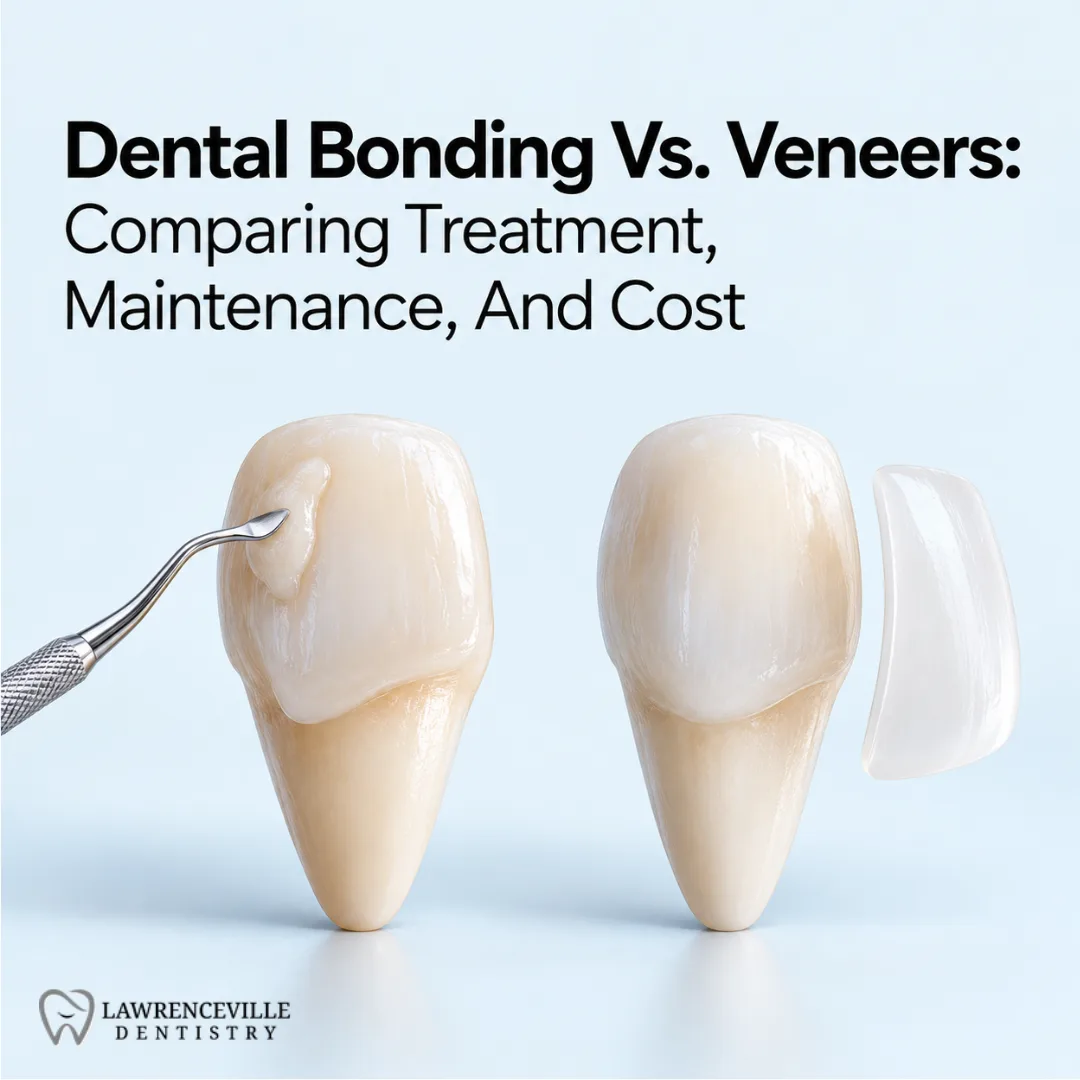
Many people hide their smile because of chips, gaps, or stains. They ask whether dental bonding or veneers will fix the problem. The choice can feel confusing and expensive.
One clear fact helps: bonding uses composite resin and often finishes in one visit, while porcelain veneers take more time and cost more. Here you will know the treatment steps, care needs, and price differences.
Dental bonding offers a fast way to fix chips, cracks, or gaps in teeth. Dentists use tooth-colored resin that blends right in with natural teeth.
Bonding uses composite resin to repair chips, gaps, and discoloration. A dentist roughens the enamel, applies the resin, sculpts the shape, and cures it with a light. The process supports cosmetic dentistry and tooth restoration with little pain.
It takes about 30 to 60 minutes per tooth and usually costs less than veneers. Patients leave with same-day results and minimal enamel removal. Staining resistance and durability fall short of porcelain, so maintenance and touch-ups may follow.
Dental bonding offers a quick solution for those looking to repair their smiles. This process involves applying a tooth-colored resin to the affected area.
The bonding process provides an efficient way to achieve noticeable results without extensive procedures or high costs. Next, veneers present another option for those seeking significant smile improvements.
Veneers can completely change the way a smile looks. These thin shells of porcelain or composite resin bond to the front of teeth, creating an appealing appearance that many people crave.
A quick look at porcelain and composite veneers helps patients decide.
| Topic | Porcelain Veneers | Composite Veneers |
|---|---|---|
| Material | Made from medical grade porcelain. It mimics enamel shine and translucency. | Made from resin composite. It bonds directly to the tooth surface. |
| Procedure | Typically needs two visits. First visit for prep and impressions. Second visit for bonding. | Often done in one visit. The dentist sculpts and hardens the resin in the chair. |
| Enamel Removal | Requires about 0.3 to 0.7 mm of enamel. Sometimes a small reduction is necessary. | Usually needs minimal or no enamel removal. Many cases preserve most natural teeth. |
| Lifespan | Lasts about 10 to 15 years on average with care. Some last longer with good habits. | Lasts about 5 to 7 years on average. Repairs are easier if damage happens. |
| Stain Resistance | Highly resistant to stains. Coffee and red wine affect it less than resin. | Less resistant to stains. Pigments from food and drink can discolor over time. |
| Cost (US) | Ranges from $900 to $2,500 per tooth. Prices vary by lab, location, and dentist. | Ranges from $250 to $1,500 per tooth. Chairside work cuts lab fees. |
| Repairability | Can be repaired, but often needs replacement for large chips. | Easy to repair in the office. Small chips can be fixed the same day. |
| Aesthetics | Offers superior lifelike esthetics and depth. Color stability is excellent. | Looks natural when done well. Achieving exact translucency is harder. |
| First‑hand Experience | A cosmetic dentist who placed several hundred veneers notes consistent color stability with porcelain. Patients praised long term appearance. | The same clinician reports chairside composite works well for quick fixes and small gaps. Patients liked the single visit turnaround. |
| Best Use | Ideal for major smile makeovers. Strong choice for severe stains or shape changes. | Best for minor repairs, small chips, or budget-friendly updates. Good for trial smile changes. |
The veneer application process transforms smiles effectively. Patients often find the journey straightforward yet rewarding.
Patients often leave with brighter smiles that boost confidence immediately after this process!
When comparing treatment processes, patients should look at both time and complexity. Dental bonding usually takes less time and requires fewer steps than applying veneers.
The table below breaks down time and procedure complexity for bonding versus veneers.
| Step | Dental Bonding | Veneers (Porcelain) | Veneers (Composite) |
|---|---|---|---|
| Typical Visits | One visit, often 30 to 60 minutes per tooth. | Two to three visits over 2 to 3 weeks. | One to two visits. Often the same day. |
| Procedure Overview | Teeth cleaned. Surface roughened. Resin placed and shaped. Cured with light. Polished. | Initial consult. Tooth reduced by about 0.3 to 0.7 mm. Impression taken. Temporary place. Finally bonded later. | Teeth prepped lightly. Resin layered directly on the tooth. Shaped and cured. Final polish applied. |
| Enamel Removal | Minimal to none in most cases. | Moderate removal. Conservative but permanent loss of enamel. | Little to no enamel is removed in many cases. |
| Anesthesia | Often not needed for small fixes. | Local anesthesia is common for reduction and bonding. | Sometimes used for patient comfort, especially for multiple teeth. |
| Lab Work | No lab work required. | Requires lab fabrication, typically 1 to 2 weeks. | Rarely needs lab work, unless a hybrid approach is chosen. |
| Complexity | Low. Good for chips, gaps, small shape changes. | Higher. Good for major shape, size, or color changes. | Moderate. Better for cosmetic changes without full lab porcelain. |
| Chair Time Example | Thirty to sixty minutes per tooth is common. A dentist once finished three front teeth in one visit and the patient left smiling. | First visit may be 60 to 90 minutes. Final bonding visit can run 60 minutes. A prosthodontist recalled more precise steps and longer appointments for symmetry. | Forty five to ninety minutes per session is typical. Clinicians often complete a small smile update in a single appointment. |
| Adjustments | Easy to fix in follow up visits. | Adjustments may require lab rework for perfect fit. | Quick chairside tweaks usually solve small issues. |
Enamel removal is an essential step in applying veneers. Dentists remove a thin layer of enamel to ensure proper fit and bonding. This process makes the tooth ready for placement. With dental bonding, no removal of enamel is necessary. Bonding adheres directly to the teeth without altering their structure.
Some patients prefer this less invasive approach for minor repairs or cosmetic improvements. Enamel loss may concern some individuals due to its role in protecting teeth. Knowing how much enamel gets removed can help people decide which treatment suits them best. Now, let’s look at maintenance and longevity next.
Dentists recommend regular check-ups for both dental bonding and veneers. Bonding might last around 5 to 10 years, while veneers can shine bright for up to 15 years with proper care.
Dental bonding typically lasts between three to ten years. Many factors affect its lifespan, including how well a person takes care of their teeth. Regular dental visits help maintain the bond's integrity and keep it looking good.
A good oral hygiene routine can also make a big difference. Brushing twice daily and flossing regularly helps prevent wear.
Bonding works best for minor repairs and cosmetic fixes. It is not as durable as veneers but can be more affordable upfront. Some people notice staining over time, especially if they drink coffee or tea frequently.
Protecting the bonded area from high-impact activities keeps it intact longer, too. With proper maintenance, dental bonding can serve as an excellent short-term solution for improving smile aesthetics while being budget-friendly in cosmetic dentistry options.
Veneers typically last between 10 to 15 years with proper care. Many factors influence their longevity, including oral hygiene and lifestyle choices. Those who practice good dental habits can enjoy a beautiful smile for years.
Avoiding hard foods and excessive staining substances can help maintain the veneers' appearance.
Regular check-ups play a big role in preserving these cosmetic enhancements. A dentist will ensure the veneers remain intact and free from damage. With attention, they become an enduring solution in cosmetic dentistry while enhancing overall dental aesthetics significantly.
Stain resistance shapes how long a smile stays bright.
| Topic | Dental Bonding (Composite) | Porcelain Veneers |
|---|---|---|
| Material traits |
|
|
| Common staining agents |
|
|
| Lifespan before noticeable stain |
|
|
| Maintenance actions |
|
|
| Repair options |
|
|
| Cost impact |
|
|
| Clinical insight |
|
Choosing between bonding and veneers can feel like a challenge. Bonding works wonders for small chips, while veneers transform entire smiles with style.
Dental bonding excels for minor repairs. This treatment works wonders for fixing small chips or cracks in teeth. The dentist applies a tooth-colored composite resin, matching the natural color of the tooth. They shape and polish it to blend seamlessly with surrounding teeth.
This process is swift and usually takes about 30 to 60 minutes per tooth. Patients leave with an enhanced smile in no time at all. Bonding provides a solid option for individuals looking for cosmetic fixes without significant investments in dental procedures.
In short, it is ideal for those pursuing efficient cosmetic dentistry solutions that are easy on the wallet too!
For a full smile makeover, veneers usually shine the brightest. They offer an aesthetic transformation that many people crave. Porcelain veneers provide an incredible natural look and durability.
With their thin layers, they cover imperfections seamlessly. Many individuals have shared their excitement after getting veneers; it often feels like stepping into a new identity.
On the other hand, dental bonding works for minor fixes but falls short in creating that complete smile overhaul. Bonding can repair chips and gaps nicely, yet it might not match the elegance of porcelain or composite veneers for those seeking a striking change.
Those aiming for significant restoration should consider investing in veneers to achieve long-lasting beauty and enhanced confidence.
Dental bonding is a procedure where a tooth-colored resin material is applied to teeth. It helps fix chips, gaps, or discoloration. This treatment can improve your smile quickly and often in one visit.
Veneers are thin shells made of porcelain or composite resin that cover the front of teeth. Unlike bonding, which adds material directly to the tooth, veneers require some enamel removal for proper placement.
Both options need good oral hygiene like brushing and flossing daily. However, veneers may need special care because they can chip if you bite hard things; dental bonding might stain over time but can be easily repaired.
Dental bonding usually costs less than veneers since it requires fewer materials and less time in the dentist's chair. Veneers can be more expensive due to their custom nature and longer lifespan; however, prices vary by location and dentist expertise.
Tell us a little about what you need — we'll be in touch shortly.
1455 Pleasant Hill Rd Ste 807A, Lawrenceville, GA 30044, USA

Hi! I'm Tooth fairy! Your AI Assistant Ask me anything