Missing teeth can make daily life harder. People may feel pain when they chew, hide their smile, or worry about nearby teeth moving. Many look for a fix that brings comfort and keeps the mouth healthy.
A dental bridge can replace one or more teeth by using nearby teeth or implants as supports. Here you will understand common bridge types, how to pick the right one, and what to ask the dentist.
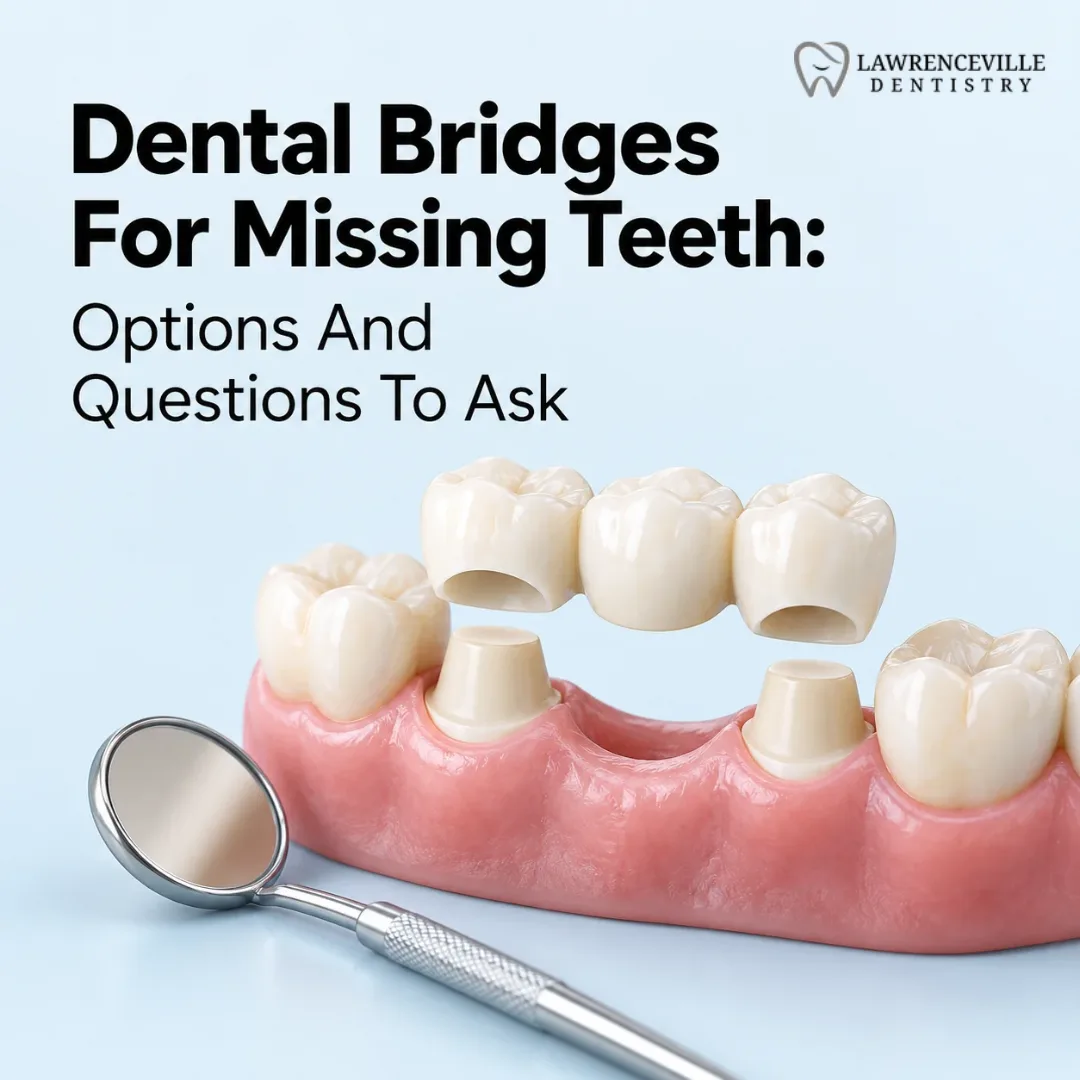
A dental bridge is a prosthetic restoration that fills a gap left by one or more missing teeth. It uses one or more pontics, or false teeth, held by crowns on nearby teeth or by implants. Patients hear about comfort, durability, and better chewing after a bridge is placed.
A dentist may fit a traditional crown-and-bridge in two visits, with the bridge lasting about 5 to 15 years with good care. Some bridges clip to natural teeth; others attach to dental implants for longer service.
One patient recalled eating a sandwich comfortably within two weeks after the crowns settled, and the dental team tracked gum health and oral care to protect the restoration.
Dentists use several bridge styles to fill gaps left by missing teeth. Each kind has a different way it fits in your mouth and helps restore your bite.
Traditional fixed bridges serve as a common solution for replacing missing teeth. They consist of two crowns on either end with one or more pontics in the middle. This structure fills gaps and helps maintain proper alignment in the mouth. Patients often find them comfortable once fitted, and they restore function for chewing and speaking.
Getting a traditional fixed bridge involves some prep work. The dentist will reshape the adjacent teeth to support the crowns securely. Many patients appreciate how these bridges blend seamlessly with their natural teeth, enhancing their smile without drawing attention to the restoration itself. Advancements in materials have made these options durable and long-lasting too.
Cantilever Bridges
Transitioning from traditional fixed bridges, cantilever bridges offer a different approach. These structures support one or both ends while anchoring on only one side. This makes them ideal for gaps where teeth are missing at the end of an arch.
Cantilever bridges use crowns placed on adjacent teeth to hold pontics in place. They work well if there’s a strong tooth next to the gap, providing stability and comfort. Many people appreciate their durability and aesthetic appeal as they blend seamlessly with natural teeth. A dentist can help decide if this type is suitable for your specific needs in dental care.
Maryland bonded bridges offer a great solution for replacing missing teeth. These bridges use metal or porcelain wings to attach to existing teeth. This design makes them less invasive than traditional bridges. They require little preparation on the adjacent teeth, keeping more of the natural tooth intact.
Patients often find Maryland bonded bridges comfortable and easy to care for. Many appreciate how quickly they can restore function and aesthetics in their smiles. The pontics fill gaps neatly, enhancing overall dental health. With proper oral care, these bridges provide a durable option for anyone facing tooth loss.
Implant-supported bridges use dental implants to replace missing teeth. These implants serve as sturdy anchors for the replacement teeth, known as pontics. Patients often find these bridges more stable than traditional options.
The process involves inserting titanium posts into the jawbone. Over time, these posts fuse with the bone, creating a solid foundation.
Many people prefer implant-supported bridges due to their durability and natural feel. With proper care, they can last many years without issue. Patients appreciate that this option improves both function and appearance.
Choosing an implant-supported bridge usually leads to better oral health too. Discussing specific needs with a dentist helps in making the right choice for tooth replacement options like traditional fixed bridges or others available today.
Choosing the right dental bridge can feel overwhelming. Focus on your specific needs, and don't hesitate to ask for guidance from your dentist.
Deciding how many teeth to replace affects which bridge works best.
| Number of Teeth Missing | Summary Points |
|---|---|
| One tooth |
|
| Two adjacent teeth |
|
| Three or more consecutive teeth |
|
| Several non-adjacent teeth |
|
| All teeth in an arch |
|
Location of the gap shapes the bridge choice and outcome.
| Location | Key Concerns | Bridge Options | Questions to Ask |
|---|---|---|---|
| Front teeth (incisors, canines) | - High cosmetic needs. - Visible when smiling or talking. - Thin enamel on adjacent teeth matters. | - Maryland bonded bridges work well for small gaps. - Traditional fixed bridges suit when crowns are already needed. - Implant-supported bridges give the most natural look. | - Will this match tooth color and shape? - How will it affect speech? - Can a less invasive option preserve enamel? |
| Back teeth (premolars, molars) | - High chewing force applies. - Durability is the top priority. - Bite alignment must be preserved. | - Implant-supported bridges offer strong support for multiple teeth. - Traditional fixed bridges work if adjacent teeth are healthy. - Cantilever bridges are risky for heavy bite areas. | - Which option handles chewing force best? - Will this change how the bite feels? - Are there longevity estimates in years? |
| Single tooth gap | - Space size is small. - Adjacent tooth health drives choice. - Cosmetic match still matters in front. | - Single implants are often best for the long term. - Maryland bridge can be a quick, conservative fix. - A traditional bridge is an option if crowns are needed anyway. | - How long before the final tooth is ready? - What are short term and long term costs? - Will adjacent teeth need shaping? |
| Multiple adjacent teeth missing | - Span length increases stress. - Support type affects success rate. - Bone volume may limit options. | - Implant-supported bridges are recommended for long spans. - Traditional bridges can work if few teeth are missing and anchors are strong. - Cantilever rarely suits long gaps. | - How many implants are needed? - Is bone grafting likely? - What is the expected lifespan in years? |
| Edge gaps near wisdom teeth | - Access and angle can complicate treatment. - Extraction history affects planning. - Posterior support is critical. | - Implant options depend on jaw angle. - Traditional bridges may require strong posterior anchors. - Cantilever rarely chosen for angled sites. | - Will jaw shape limit implant placement? - Are extra surgeries needed first? - What are the timing and healing steps? |
| Near gumline or in low bone areas | - Bone loss raises complication risk. - Gum health affects seals and looks. - Infection risk must be managed. | - Bone grafts may be required for implants. - Traditional bridges avoid grafts but alter adjacent teeth. - Maryland bridges may fail if gums recede. | - Is bone grafting needed first? - How will gum health be treated? - What is the maintenance plan? |
Adjacent teeth play an important role in choosing the right dental bridge. Healthy surrounding teeth provide better support for a new bridge. If these nearby teeth have cavities or are weak, they may need treatment first. This evaluation helps dentists decide on the best type of restoration.
A traditional fixed bridge relies heavily on adjacent crowns for stability. However, if those crowns can't hold up, other options might be necessary. For example, implant-supported bridges can bypass damaged teeth altogether and offer a solid solution for gap closure.
Understanding your tooth's condition will significantly impact your choices moving forward to select the most suitable form of dental restoration.
When considering dental bridges, patients often have many questions. Knowing what to ask can help them feel more at ease and informed about their options.
Choosing the right dental bridge depends on specific factors. The number of missing teeth plays a big role. For a single gap, a traditional fixed bridge might work well. If the space is wide, an implant-supported bridge could be better.
Location matters too. Gaps in the front usually need aesthetic bridges, like Maryland bonded ones. Adjacent teeth condition also influences choice; healthy teeth can support crowns effectively while weaker ones may require different options for stability and comfort.
Consulting with a dentist helps find the best solution for individual needs and enhances overall oral health.
The procedure for dental bridges usually takes about two visits to the dentist. During the first visit, a dentist prepares the adjacent teeth by reshaping them. They will place temporary crowns on these teeth while creating custom bridges in a lab. This process can take around one to two hours.
On the second visit, after the lab completes the bridge, the dentist installs it permanently. This appointment often lasts about an hour as well. Patients should expect some preparation time in between visits and may feel anxious; however, knowing this simple timeline can help ease their nerves as they plan for their tooth replacement journey.
Many people wonder about options beyond dental bridges for their missing teeth. Exploring alternative treatments can lead to better solutions and enhanced oral health.
Exploring these choices alongside dental bridges allows individuals to make informed decisions about their oral care, ensuring comfort and improved dentition over time.
Dental bridges are fixed appliances that fill gaps caused by missing teeth. They connect two or more crowns on either side of the gap, creating a bridge to restore your smile.
There are several types of dental bridges: traditional, cantilever, Maryland bonded, and implant-supported. Each type has its own benefits based on your specific needs and circumstances.
With proper care, dental bridges can last between 5 to 15 years or even longer. Regular check-ups with your dentist help maintain their durability and function.
Ask about the best type for your situation, the procedure details, recovery time, and costs involved. Understanding these aspects will help you make an informed decision about restoring your smile.
Tell us a little about what you need — we'll be in touch shortly.
1455 Pleasant Hill Rd Ste 807A, Lawrenceville, GA 30044, USA
Hi! I'm Tooth fairy! Your AI Assistant Ask me anything