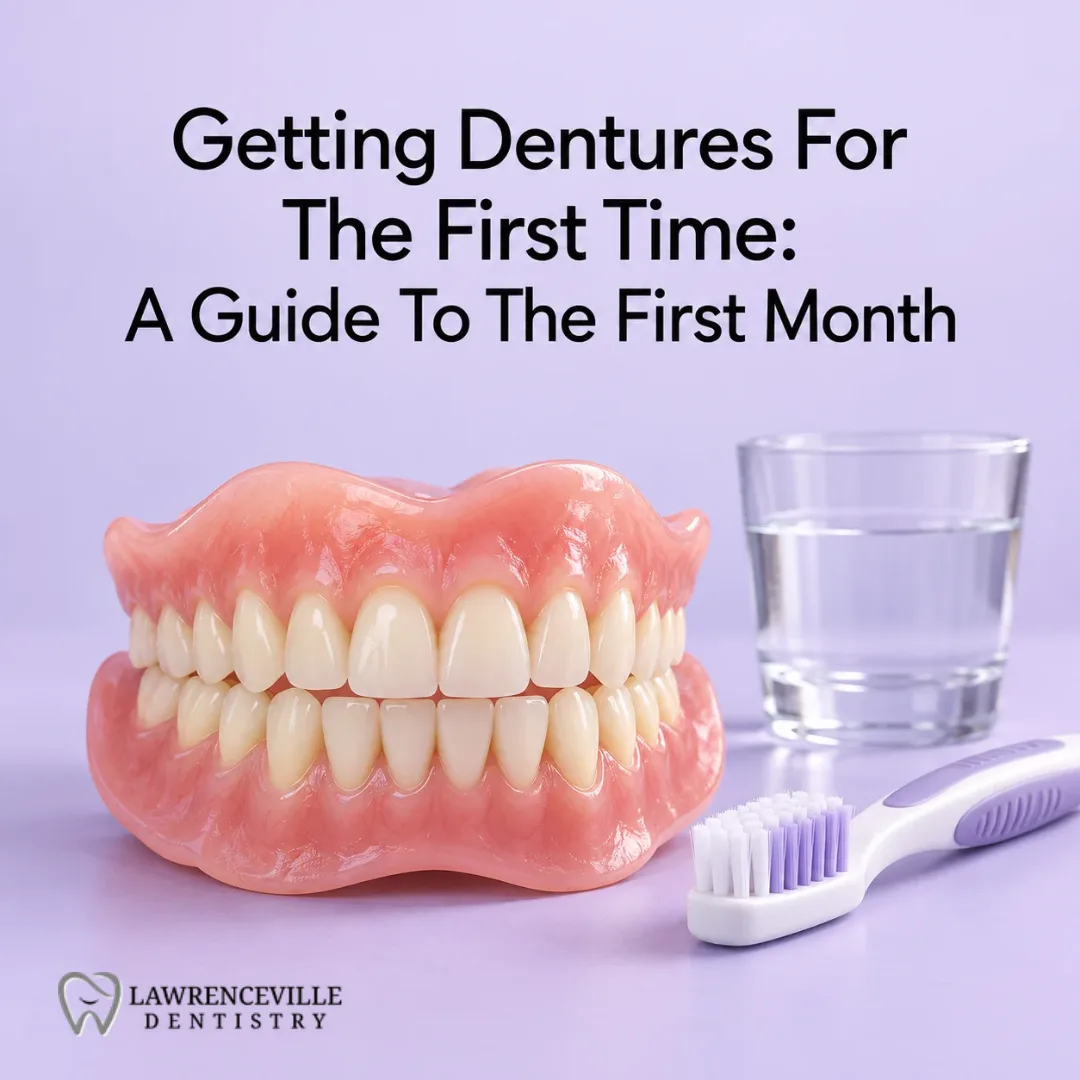
Many people worry about eating, talking, and smiling after getting dentures for the first time. They feel odd mouth sensations, more saliva, and sore spots. They fear the change and seek clear advice.
Most people adapt to new dentures in four to six weeks. Here you will be able to break down the first month into simple steps: the first 24 hours, weeks one and two, and weeks three and four. You will also know tips on swelling, soft foods, speech practice, sore spot care, and cleaning.
The First 24 Hours With Dentures
The first day with dentures can feel strange and a bit overwhelming. Give yourself time to adjust as your mouth learns this new normal.
Manage Swelling And Heal Gum Tissue
Swelling often peaks 48 to 72 hours after denture placement. Gums react to pressure and saliva shifts. A patient shared his firsthand account; his cheeks puffed and dentures felt loose for two days. Use cold packs for 10 minutes on, 10 minutes off to cut inflammation and ease pain.
Soft foods help gums heal while eating continues. Dentists recommend saltwater rinses three times daily to speed recovery and guard oral hygiene. That same patient logged progress, noting soreness eased by day five and speech grew clearer.
Attend follow-up denture fittings within a week for adjustment and to limit long-term discomfort for first-time users.
Follow A Soft Food Diet For New Dentures
Getting used to dentures feels like a big change. Eating becomes a new adventure as you adjust.
- Start with mashed potatoes. They are soft and easy to eat, helping people feel comfortable while chewing.
- Yogurt offers a creamy texture that goes down smoothly. It provides nutrition without discomfort.
- Applesauce is perfect for adding flavor to meals without the hassle of chewing hard foods.
- Scrambled eggs deliver protein and softness, making them a great breakfast choice for first-time users.
- Soft fruits like bananas and peaches provide natural sweetness while being gentle on gums.
- Soups can be warm and soothing; choose pureed varieties for easier eating.
- Cooked vegetables such as carrots or squash should be soft and tender, making them easier to chew.
- Oatmeal works well for breakfast; it’s filling yet soft enough not to irritate gums.
- Fish is a good option because it flakes easily, making it simple to chew and swallow.
- Pasta dishes with light sauces offer good variety; just avoid anything too chewy or crunchy at this stage.
This diet helps support comfort during the adjustment period right after getting dentures. Chewing softer foods reduces discomfort and promotes healing of gum tissue as they adapt to their new dental appliances.
Weeks 1 And 2: Dentures Adjustment
During the first two weeks, users will adjust to their new dentures. They should try different chewing techniques and practice speaking clearly with them.
Use Chewing Techniques And Practice Speech With Dentures
The first few weeks with dentures can feel strange. Learning to chew and speak with them takes time and practice.
- Start with soft foods. Chewing becomes easier when you eat things like mashed potatoes, yogurt, or applesauce. These foods help ease discomfort while your mouth adjusts.
- Chew slowly at first. This strategy allows the gums to accommodate the dentures without too much pressure. Take smaller bites to avoid overwhelming your mouth.
- Use both sides of your mouth when chewing. This technique distributes pressure evenly across your gums and helps with balance. It also encourages a more natural chewing motion.
- Practice speaking out loud in a quiet space. Reading books or reciting favorite phrases helps develop confidence with speech patterns and articulation over time.
- Focus on pronouncing difficult sounds clearly. Words that include “s,” “f,” and “v” may need extra attention initially as they require precise tongue placement.
- Stay patient during this adjustment phase; it’s normal for discomfort to occur along the way, but practicing regularly builds comfort and skill.
- Keep saliva production in mind, as new dentures may increase saliva flow temporarily; this is usually short-lived but important to manage while talking or eating.
- Remind yourself that many others have successfully adjusted to dentures; sharing experiences can make the process easier and less intimidating for first-time users.
- Regularly check for sore spots inside your mouth after trying new foods or practices; reporting these issues during follow-up visits ensures better fittings and comfort over time.
- Seek dental advice if difficulties persist beyond a month; understanding how long adjustments take can help set realistic expectations for oral functions like eating and speaking smoothly again.
Treat Sore Spots And Denture Irritation
Sore spots and denture irritation can be common for first-time users. Adjusting to dentures takes time, and discomfort is part of the process. They may rub against the gums, causing irritation or sores.
This issue can make eating and speaking harder than it should be. Keeping an eye on these sore areas helps manage pain effectively.
Using over-the-counter dental products works wonders for sore spots. Denture adhesive can provide a better fit while acting as a cushion between the denture and gums. Rinsing with warm saltwater also aids in healing gum tissue.
Staying consistent with this care plan helps ease discomfort quickly and promotes overall oral health during those crucial adjustment weeks.
Weeks 3 And 4: Denture Routine And Care
Weeks 3 and 4 bring a new chapter in denture care. Users can now tackle firmer foods with confidence while keeping their dentures clean and fresh.
Eat Firm Foods With Dentures
Eating solid foods can be a challenge at first, but it becomes easier with practice. As the gums heal, introducing firm foods helps restore normal oral functions.
- Start slowly with easy-to-chew items such as soft fruits, cooked vegetables, and pasta to avoid discomfort.
- Gradually add firmer options like bread, chicken, or beef once comfortable. Chewing these foods strengthens jaw muscles.
- Cut food into smaller pieces to make chewing easier and minimize stress on gums and dentures.
- Take small bites and chew evenly on both sides of the mouth; this helps distribute pressure across dentures.
- Stay hydrated during meals; drinking water can help wash down food and ease any potential discomfort.
- If firm foods cause pain or irritation, revert to softer options until the gums adjust fully.
- Consult dental advice regarding which types of foods are best suited for new denture wearers; professional input is invaluable at this stage.
- Maintain good oral hygiene after eating; proper cleaning prevents bacteria buildup that could affect overall oral health.
With patience and attention to comfort levels, users will adapt to eating firm foods more confidently over time.
Clean Dentures And Maintain Oral Hygiene
The transition to firm foods is just one step in getting used to dentures. Maintaining oral hygiene plays a crucial role in keeping gums healthy and dentures clean.
- Rinse dentures after each meal. This simple act helps remove food particles and keeps the denture surface clear.
- Brush dentures daily using a soft-bristle brush. Cleaning removes plaque and prevents stains, ensuring comfort during use.
- Use a denture cleaner as recommended by dental professionals. Regular cleaning will help maintain the denture's shine and prevent bad odors.
- Soak dentures overnight in a cleansing solution or plain water. This allows for effective cleaning while providing moisture to avoid any warping.
- Clean gums gently with a soft brush or cloth every day. Proper gum care promotes good oral health and reduces irritation.
- Visit the dentist regularly for check-ups and adjustments as needed. Dentists can spot issues early, ensuring the best fit and comfort for first-time users.
- Avoid abrasive cleaners, bleach, or hot water on dentures. These substances can damage the material and affect how well they function.
- Keep a routine that prioritizes oral hygiene alongside denture care, allowing smooth adaptation over time.
First-hand experiences reveal that consistent care fosters confidence in speaking and eating with new dentures while supporting overall health.
Frequently Asked Questions
What should I expect in the first month of getting dentures?
In your first month with dentures, you might feel some discomfort. It’s normal as your mouth adjusts. Eating and speaking may take practice, but it gets easier over time.
How do I care for my new dentures?
To care for your new dentures, rinse them after meals to remove food particles. Clean them daily with a soft brush and mild soap or denture cleaner. Avoid hot water; it can warp the material.
Will my speech change when I start wearing dentures?
Yes, many people notice changes in their speech at first. You might have a lisp or find certain sounds tricky to pronounce. Practice speaking out loud; this will help improve clarity.
Can I eat normally right away with new dentures?
Eating normally takes time with new dentures; they require adjustment just like a pair of shoes does when you first wear them! Start with softer foods and gradually try harder ones as you become comfortable.