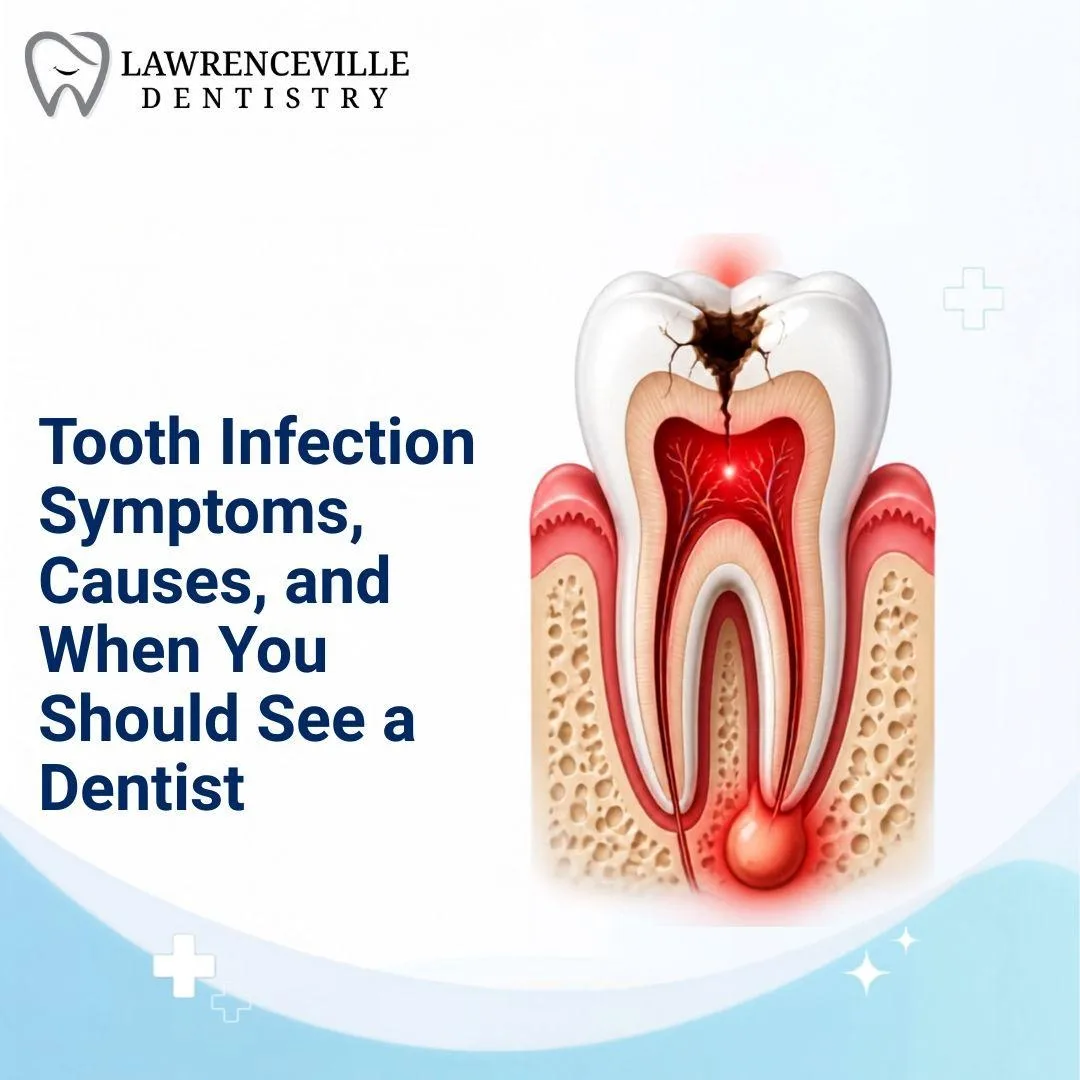
Many people wake to a sharp toothache or feel a dull, constant pain in the jaw. They may notice sensitivity to hot or cold, swelling, or pus near a tooth, and they worry that a tooth infection is the cause.
A tooth abscess is a pocket of pus caused by a bacterial infection near the tooth. Sensitivity to temperature and pain when biting are common signs. Here you will find common tooth infection symptoms, learn about causes like cavities, gum disease, trauma, and poor dental care, and see when to seek urgent dental care. We will also outline likely treatments, from antibiotics to root canal, and emergency steps for severe swelling or breathing trouble.
Tooth infections can show several common signs and symptoms. A persistent, deep, and throbbing pain in the tooth or jaw often serves as an early warning sign of a tooth infection. Sensitivity to hot or cold temperatures frequently occurs in affected individuals. Some may also feel sensitivity to pressure when biting or chewing.
Visible abscesses near an infected tooth indicate a severe problem that needs urgent care. Moderate swelling around the area often requires contacting a dentist as well. If someone experiences fever and chills, it may mean the dental infection is spreading throughout the body.
Facial or neck swelling signals further complications from the infection. Difficulty breathing or swallowing presents a serious risk that demands immediate attention from a healthcare professional.
Tooth infections often arise from untreated decay, gum disease, or trauma. Poor oral hygiene plays a significant role in increasing the risk of developing a dental infection. Failing dental work can also lead to complications that result in tooth infections.
Bacteria enter the pulp inside the tooth and cause inflammation known as pulpitis. This condition can escalate into a serious problem.
Certain factors heighten an individual's chances of experiencing an abscess. Individuals with weakened immune systems may struggle more against bacteria. People who frequently skip dental checkups are more prone to issues like tooth decay and gum disease, leading to potential infections.
Regular monitoring helps maintain good oral health and prevents complications like swelling or pus formation around teeth.
A dental infection demands urgent attention. Visible abscesses near the affected tooth require immediate contact with a dentist. A deep, throbbing pain in the tooth or jaw often signals an emergency. Sensitivity to hot or cold can add to discomfort. Localized swelling around the tooth also indicates that help is needed soon.
Fever and chills show that the infection may be spreading through the body. Facial or neck swelling suggests it has moved beyond the local area. Difficulty breathing or swallowing should never be ignored; this could indicate a severe systemic issue from a tooth infection.
Seeking treatment promptly ensures proper care for these serious symptoms and can prevent complications down the line. Read more about how dentists treat an abscessed tooth.
Common tooth infection symptoms include a toothache, sensitivity to hot or cold, swelling near the tooth, and pus. You may see a dental abscess or signs of gum disease. Germs and bacteria cause these problems.
A dental infection starts when bacteria enter the tooth. This can follow tooth decay, a crack, or ongoing gum disease. The infection can form an abscess and lead to a bad toothache.
See a dentist right away for intense toothache, growing swelling, pus that drains, or trouble breathing or swallowing. These signs can mean a dental emergency or a dental abscess.
Treatment often includes antibiotics to fight the bacteria. A dentist may drain a dental abscess. They may do a root canal or remove the tooth. Treating gum disease can stop more infections and ease a toothache.
Worried a tooth infection is brewing? Same-day emergency dental care in Lawrenceville can stop the pain and the infection before it spreads — call 770-415-0077.
The most common symptom is a deep, throbbing pain in the tooth or jaw that does not go away. Many people also notice sensitivity to hot or cold, pain when biting or chewing, swelling around the gum, or a visible pocket of pus near the tooth. Fever, chills, or facial swelling suggest the infection is spreading and needs urgent attention.
A tooth abscess is caused by bacteria reaching the inner part of the tooth or the surrounding gum tissue. Untreated cavities are the most common route, but deep gum disease, a cracked or injured tooth, and long gaps between dental visits also allow bacteria in. Once the bacteria multiply, the body walls the infection off and a pocket of pus forms.
No, a tooth infection will not clear up on its own. The pain may fade for a while if the abscess drains, but the bacteria remain and the infection continues to spread into the bone and soft tissue. Only dental treatment that removes the source, such as draining the abscess, root canal therapy, or extraction, actually resolves it.
Seek urgent care right away if you have facial or neck swelling, fever and chills, or any difficulty breathing or swallowing. These signs mean the infection is moving beyond the tooth and can become dangerous quickly. Severe pain that keeps you awake, swelling that grows over a few hours, or pus with a bad taste also warrant same-day evaluation.
Dentists treat a tooth infection by removing the source of the bacteria. That usually means draining the abscess, then either root canal treatment to clean out the infected pulp and save the tooth, or extraction when the tooth cannot be restored. Antibiotics may be prescribed to control a spreading infection, but they support treatment rather than replace it.
Tell us a little about what you need — we'll be in touch shortly.
1455 Pleasant Hill Rd Ste 807A, Lawrenceville, GA 30044, USA

Hi! I'm Tooth fairy! Your AI Assistant Ask me anything