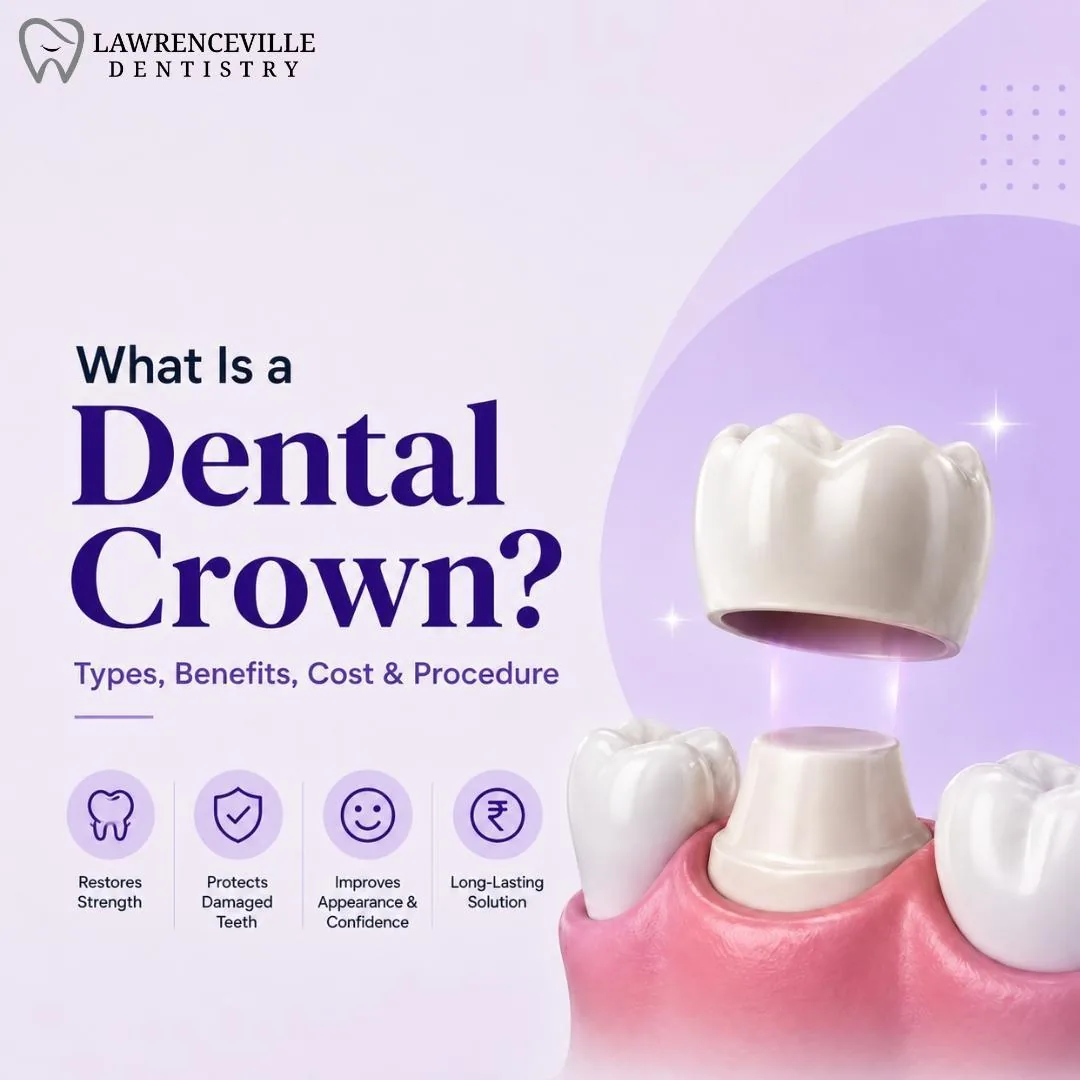
A damaged, decayed, or painful tooth can make chewing hard and smile feel wrong. Many people want a clear fix for tooth decay, a broken tooth, or a worn filling. A Dental Crown, also called a tooth cap, can restore shape and strength. It can serve as a dental restoration for a natural tooth or cover a dental implant.
One key fact is that a dental crown fits over the prepared tooth to protect it and restore function. Here you will know about crown types, such as ceramic, zirconia, porcelain-fused-to-metal, and full metal.
Dental crowns come in various types, each offering unique advantages. Patients can choose from materials like ceramic and metal for restoration or cosmetic purposes while considering their costs and insurance coverage.
Ceramic crowns offer a natural look. They blend well with other teeth and work great for front teeth. Zirconia crowns provide strength and durability. These crowns resist wear and tear while maintaining an appealing appearance.
Porcelain-fused-to-metal crowns combine aesthetics with support. The porcelain layer gives a lifelike look, while the metal base adds strength. Full metal crowns are robust options ideal for back teeth. They withstand heavy chewing forces but lack the aesthetic appeal of other types. Each material serves specific needs in dental restoration. Choosing the right type enhances oral health and ensures long-lasting results in cosmetic dentistry procedures like crown placement.
Dental crowns serve multiple key benefits, including restoration, protection, and aesthetics. They act as a protective cap for weakened or damaged teeth. By covering cracked or decayed teeth, crowns help restore their strength and functionality. Dental crowns improve the appearance of a tooth significantly. Patients often choose porcelain crowns due to their natural look.
Crowns offer vital protection against further damage from tooth decay or fractures. They also support dental implants by fitting over them securely. The average price of a dental crown ranges between $800 and $2,500 per tooth; specific costs depend on materials used.
Investing in quality dental care ensures improved oral health and long-lasting results for individuals seeking dental restoration options like caps or bridges.
The average price of a dental crown ranges between $800 and $2,500 per tooth. Porcelain crowns typically cost between $800 and $3,000. Patients can expect porcelain-fused-to-metal crowns to range from $500 to $1,500 each. Dental insurance often covers a portion of the costs for dental restoration procedures like crowns. Coverage varies based on the plan, so individuals should check their specific policies.
Patients must consider out-of-pocket expenses when budgeting for tooth restorations. Costs may include additional fees for consultations or follow-up visits related to the crowning process. Understanding these aspects helps patients make informed decisions regarding their oral health solutions.
The dental crown procedure involves several crucial steps. The dentist prepares the tooth, takes impressions, and places a temporary crown before fitting the final restoration.
Tooth preparation involves reshaping the damaged tooth to accommodate a dental crown. Dentists remove decay and any weakened parts of the tooth. They create a clean base for the crown to fit securely. This process ensures that the crown will restore both function and appearance.
After prepping the tooth, dentists take impressions. These impressions capture an accurate mold of the shaped tooth and surrounding areas. The laboratory uses this mold to craft a custom-fitted crown tailored for each patient’s needs. Patients then receive temporary crowns while waiting for their permanent ones. This step is essential in ensuring proper alignment before final placement of dental crowns.
After dentists prepare the tooth for a crown, they place a temporary crown over it. This cap protects the treated tooth while waiting for the permanent one to be ready. Temporary crowns are typically made from acrylic or metal and fit snugly on the prepared tooth. They serve as a placeholder until the custom crown is complete.
Patients must take care of their temporary crowns. Avoiding hard foods can help prevent damage. Maintaining oral hygiene remains vital during this period. Regular brushing and gentle flossing will support overall oral health. The dentist will provide specific instructions to ensure proper care of both the temporary and future dental crowns throughout this process.
The dentist will place the final dental crown after preparing the tooth and taking impressions. This custom fit ensures that it matches the natural shape of surrounding teeth. The crown can enhance a person's smile while restoring function to a damaged tooth.
Proper care instructions are crucial for maintaining oral health with a new crown. Patients should avoid hard foods immediately after fitting; these can affect how well the crown stays in place.
Oral hygiene remains essential even with a crowned tooth. Daily brushing, flossing, and regular dental check-ups help protect against decay or damage to both the crown and underlying tooth structure.
Understanding these care tips allows individuals to enjoy their dental restoration fully while protecting their investment in oral health, minimizing future costs related to repairs or replacements of crowns.
A dental crown, also called a tooth crown or tooth cap, is a cover a dentist fits over a weak or broken tooth. It helps with dental restoration and protects the tooth from tooth decay. It also supports oral health and restores chewing.
Crown types include ceramic crown, metal crowns, and porcelain fused to metal. Dentists also use crowns for a dental implant and for teeth that hold a dental bridge. Prosthodontics specialists pick the best type for complex needs.
A crown stops further tooth decay and saves a damaged tooth. It restores the tooth shape and new function. It works with other dental restoration to improve oral health.
The dental procedure begins with an exam and x-rays. The dentist shapes the tooth and makes an impression. A lab makes the crown and the dentist fits it in a second visit. Cost estimation depends on crown type, whether you need a dental implant or a bridge, and your dental insurance. Ask your dentist for a clear price estimate.
Yes. A crown can attach to a dental implant abutment. A crown can also sit on teeth that support a dental bridge. Prosthodontics care often handles these restorations. Talk to your dentist about a tooth crown or tooth cap option.
Tell us a little about what you need — we'll be in touch shortly.
1455 Pleasant Hill Rd Ste 807A, Lawrenceville, GA 30044, USA

Hi! I'm Tooth fairy! Your AI Assistant Ask me anything